Cats
The Wife He Never Wanted: A Marriage-In-Crisis Billionaire Romance (Second Chance Billionaires)Cats occupy a crucial place in the Harbor Street story because they make the shelter’s purpose tangible: its success is measured not by capital, plans, or appearances, but by whether frightened and dependent animals can be kept safe. During the roof collapse, cats become part of the emergency that forces Paige Templeton, Claire, and Maddox Caldwell to act together, while the rebuilt shelter later gives them dedicated space and a more durable form of care.
Cats in the Harbor Street Crisis
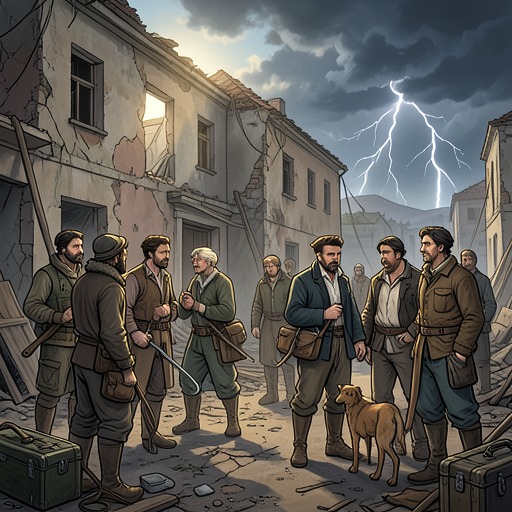
Cats are among the animals endangered when the east end of Harbor Street gives way during a storm. Claire reports that the collapse has opened the building to the sky, sent water into the main kennel room, and left thirty animals needing relocation within an hour. The emergency is not limited to Dogs: cats are also trapped in a structure whose ordinary protections have failed, and the shelter has nowhere readily available to place them because emergency boarders and veterinary clinics are full.
The rescue becomes physically difficult as runoff reaches ankle depth and rain enters through the missing section of roof. Paige works with Claire and other volunteers while frightened Dogs, yowling Cats, and whimpering puppies are passed through a line of soaked helpers. The animals’ different cries and needs prevent the disaster from becoming an abstract construction problem. Every decision is immediate and specific: the next crate, the next animal, and the water still rising.
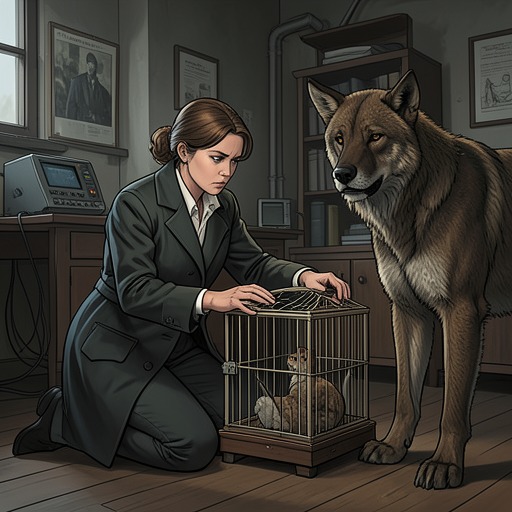
Paige carries a senior cat in a pillowcase because the available carriers are already occupied. The improvised container records the scarcity surrounding the evacuation while also showing the practical flexibility of the people protecting the animals. The cat is not treated as scenery or as a symbol detached from bodily danger; it must be lifted, carried, and moved before the flooding worsens. In the same sequence, Paige holds a flashlight in her teeth while Claire coaxes a terrified pit bull from the run nearest the collapse, making the rescue a chain of coordinated acts rather than a single heroic gesture.
Design and Institutional Care
The collapse changes what a viable shelter must mean. When Maddox later presents a rebuilding proposal, he brings preliminary feasibility sketches, possible sites, zoning and flood-plain notes, and a construction commitment from the Caldwell organization, but he does not present a finished building as an answer. The program document leaves space for Claire and Paige to specify intake capacity, an isolation ward, quiet rooms, and community space. That process matters to Cats as much as to the human participants, because their safety depends on rooms designed around animal needs rather than around the prestige or convenience of the builder.
Maddox explicitly acknowledges that he knows buildings but does not know shelters. He therefore gives Claire, the director who understands the facility’s daily requirements, authority to define what must be built, while he supplies the money, land, and crew. Claire identifies a real quarantine wing and insists that the isolation ward have its own air handling, drawing on what the old shelter’s failures had taught her. The rebuilt institution thus answers the emergency retrospectively: the animals’ exposure during the collapse becomes evidence for a better system of separation, ventilation, and protection.
This arrangement also marks a change in the ethics of reconstruction. Maddox’s former method was to control every variable and arrive with the answer already formed. Here, the blank fields in the program document leave the pen with Paige and Claire. The project is useful precisely because it does not convert care into another acquisition-style transaction in which the donor dictates the result. Its structure recognizes that the people who live with animals’ needs must shape the environment in which those needs are met.
Cats in the New Harbor Street
The new Harbor Street opens on a Saturday in October with a cat room among its functioning spaces. The building includes the isolation ward with its own air handling, a real quarantine wing, and a community room large enough for indoor adoption events. Families move through rows of animals under walls that hold and a roof that no longer requires anyone to pray when the sky darkens. Cats therefore belong to the ordinary public life of the rebuilt shelter, not merely to the emergency that made rebuilding necessary.
On opening day, Jayne Caldwell is beside the cat room with two toddlers from a Templeton cousin’s family. She teaches them to let a cat approach rather than grabbing it, turning a small encounter into a lesson in boundaries and reciprocal trust. The instruction gives the Cats a measure of agency: their interaction with children is not organized around possession or forced handling, but around allowing the animal to choose the pace of contact.
The scene also places Cats inside a wider network of family and community relationships. Jayne has become a consistent presence at Templeton family dinners and an honorary grandmother to other people’s children; at the shelter, that same persistence appears as patient instruction beside the cat room. Animal care is consequently shown as a learned social practice passed between generations and households, rather than as a private sentiment reserved for adopters.
Narrative and Ethical Significance
Cats help define the difference between repairing a structure and creating a shelter. The old building’s collapse exposes how quickly animals become endangered when walls and roofs fail. The new Harbor Street answers that vulnerability with infrastructure that includes quarantine, independent air handling, and usable community space. Reconstruction is judged by the lives the building can protect, not by the mere fact that the Caldwell name stands behind it.
Their presence also reinforces the story’s larger movement away from control and toward responsive care. Maddox’s contribution becomes meaningful when it gives Paige and Claire the authority to decide what the shelter requires, just as Jayne’s lesson beside the cat room treats a cat’s approach as something to be respected rather than managed. In this framework, Cats are not passive objects of rescue. Their fear, vulnerability, and need for suitable space expose institutional failures and compel the humans around them to build differently.
At the opening, Paige sees a full room on a good day and realizes that there is no emergency left to put out. Cats, alongside the other animals, make that quiet achievement visible. Their protected presence converts the memory of the ruined building into an ongoing promise: when the next storm comes, Harbor Street will be prepared to shelter living beings rather than merely hope that the roof holds.